
FODMAP Diet vs Gut Hypnotherapy: Which Works Better for IBS?
An evidence-based comparison of the low FODMAP diet and gut-directed hypnotherapy for IBS. Learn how each works, what the research shows, and whether combining them makes sense.
Why your anxious mind and troubled gut keep making each other worse – and the science-backed approach that finally breaks the loop.
You're not imagining it: your anxiety and IBS really are connected. And until you address both, neither will fully resolve.
The IBS anxiety connection is one of the most frustrating aspects of living with digestive issues. You worry about symptoms, which triggers more symptoms, which creates more worry. It feels like a trap with no exit.
Find out in 60 seconds
Adapted from the Stanford & Tellegen clinical scales
When reading a book or watching a movie, do you get so absorbed you lose track of time?
If you've ever had your IBS flare up before a big meeting, felt your stomach knot when you're nervous, or found yourself anxiously scanning for the nearest bathroom in every new location – you've experienced the anxiety-IBS connection firsthand.
The good news? This connection also means that treating the anxiety component can dramatically improve your gut symptoms – and vice versa. Understanding how anxiety and IBS interact is the first step toward finally breaking free.
The anxiety-IBS connection is not “all in your head” – it's a medically recognized, extensively researched phenomenon involving real physiological pathways between your brain and gut.
A landmark study published in Molecular Psychiatry confirmed that IBS affects 5-10% of the global population, and it's not simply a gut disorder – it's classified as a “disorder of brain-gut interactions.”
Research shows 40-60% of IBS patients have co-existing anxiety or depression, with some studies reporting rates as high as 80%.
Source: World Journal of Gastroenterology, PMC4202343
But here's what makes this connection particularly tricky: the relationship is bidirectional. This means:
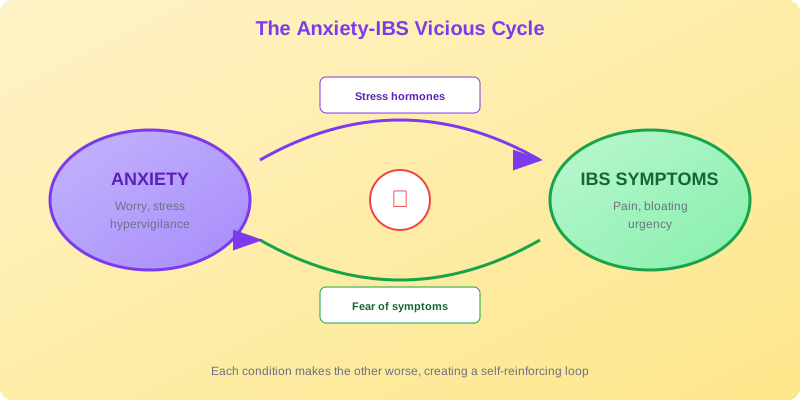
The bidirectional relationship between anxiety and IBS creates a self-reinforcing cycle.
A 2023 review in Nature's Molecular Psychiatry confirmed that the neurobiology of IBS involves altered communication between the brain and gut, with anxiety serving as both a trigger and consequence of symptoms.
“Up to one-third of people with IBS also experience anxiety or depression. Gastrointestinal and psychological symptoms both drive health-care use in people with IBS.”
Understanding how the IBS anxiety connection becomes a self-perpetuating trap is the first step to escaping it. Here's how the cycle typically works:
This is why treating only the gut symptoms (with diet, medications, etc.) often fails to provide lasting relief. And why anxiety treatments alone (like standard therapy) may help with worry but not fully resolve the physical symptoms.
The gut-brain axis is the biological superhighway that makes the anxiety-IBS connection possible. It's not a metaphor – it's a real, physical network connecting your brain and digestive system.
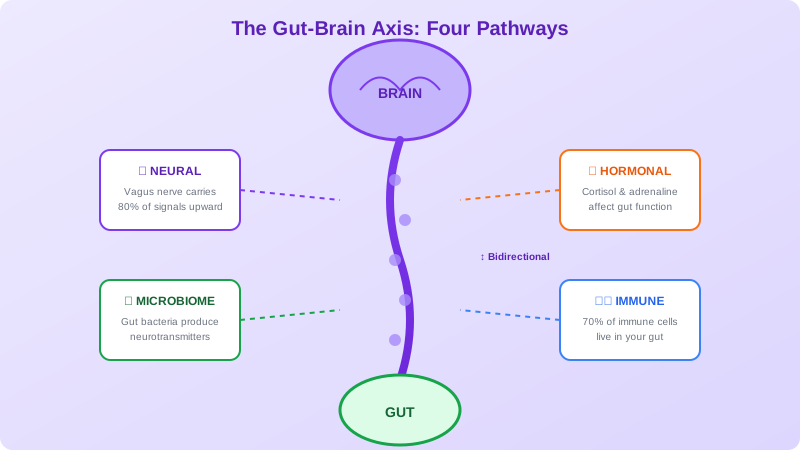
Here's how it works:
Your gut produces approximately 90% of your body's serotonin – the 'feel good' neurotransmitter. This explains why gut problems often coincide with mood changes.
Source: Yano et al., Cell (2015)
When you're anxious, your brain sends alarm signals through all these pathways simultaneously. Your gut responds with:
And because the communication is bidirectional, your now-disturbed gut sends distress signals back to the brain, amplifying anxiety. This is the neurobiological basis of the IBS anxiety connection.
Trapped in the anxiety-IBS cycle?
Gut-directed hypnotherapy addresses both the brain and gut sides of the connection simultaneously.
See If This Could Help You →Here's the key insight that changes everything: because the anxiety-IBS connection runs through the gut-brain axis, treatments that target this axis can break the cycle from both ends simultaneously.
This is exactly what gut-directed hypnotherapy does. Unlike treatments that focus on either the gut (diet, medications) or the mind (traditional talk therapy), gut-directed hypnotherapy works on the connection itself.
During hypnotherapy, your nervous system shifts from “fight or flight” to “rest and digest.” This directly reduces the stress signals flooding your gut and improves vagal tone – the strength of your calming nervous system.
Specific gut-directed suggestions help your brain turn down the “volume” on gut signals. Normal sensations stop being interpreted as painful or threatening. Brain imaging studies show actual changes in how the brain processes gut signals after hypnotherapy.
Hypnotherapy helps you develop new responses to potential trigger situations. Instead of automatic anxiety, you develop calm confidence. This stops the cycle before it can restart.
With repeated sessions, your brain physically rewires. The pathways that created the vicious cycle are replaced with healthier patterns. This is why results last years after treatment ends.
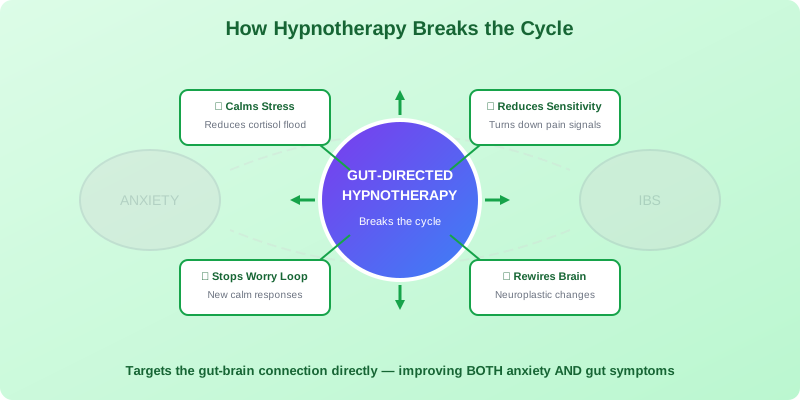
Hypnotherapy intervenes at multiple points in the cycle, creating lasting change.
“Gut-directed hypnotherapy has the unique ability to target both the psychological and physiological components of IBS simultaneously, making it ideal for patients with significant anxiety.”
The efficacy of hypnotherapy for the anxiety-IBS connection isn't theoretical – it's backed by decades of research across multiple research centers worldwide.
A comprehensive review confirmed that treatments addressing both anxiety and gut symptoms produce better outcomes than gut-focused treatments alone. Hypnotherapy was highlighted as particularly effective.
Lancet Gastroenterology & Hepatology (2023)Multiple studies show gut-directed hypnotherapy improves both gut symptoms AND anxiety scores – often with greater reductions in anxiety than dedicated anxiety treatments.
American Journal of GastroenterologyThe Manchester research group has consistently shown 75-80% of IBS patients respond positively to gut-directed hypnotherapy, with improvements in both physical symptoms and psychological wellbeing.
Gut Journal, Multiple Studies (1984-present)fMRI studies show hypnotherapy creates measurable changes in brain regions responsible for processing gut signals and anxiety – proof that the changes are neurological, not just subjective.
Neurogastroenterology & MotilityWhile professional gut-directed hypnotherapy offers the most complete solution, there are things you can start doing today to begin loosening the anxiety-IBS connection:
Practice slow, deep belly breathing for 5 minutes twice daily. This directly stimulates the vagus nerve and shifts your nervous system from stress to calm.
Keep a simple log of stress levels AND gut symptoms. You'll start to see patterns that help you anticipate and prepare for vulnerable times.
Practice noticing body sensations without judging them. This helps reduce the hypervigilance that amplifies gut signals into pain and worry.
Replace “something is wrong” thoughts with “my gut is sensitive but not damaged.” This interrupts the catastrophizing that fuels anxiety.
Slowly reintroduce situations you've been avoiding (with coping tools in place). Avoidance strengthens the cycle; gentle exposure weakens it.
Eating at consistent times helps regulate your gut's natural rhythms, which are disrupted by stress. This provides a baseline of predictability.
Ready to break free from the anxiety-IBS cycle?
Gut-directed hypnotherapy addresses both sides of the connection for lasting relief.
Apply to Work With Me →It can start from either direction, and often the original trigger doesn't matter for treatment. What matters is that both are now connected – and treating the connection helps both.
Standard anxiety treatments alone usually don't resolve IBS. But gut-directed hypnotherapy, which targets the gut-brain connection specifically, often improves both simultaneously.
Never change medications without discussing with your doctor. Hypnotherapy works well alongside medication, and many patients eventually reduce medication with their doctor's guidance.
Many people notice some improvement within the first few sessions. Full benefits typically develop over 8-12 sessions as the brain creates new patterns.
No. Gut-directed hypnotherapy creates lasting neuroplastic changes in how your brain processes gut signals. It's not about managing stress better – it's about rewiring the connection itself.
Hypnotherapy can help even with significant anxiety. For severe cases, we may work more gradually and often coordinate with your existing mental health provider.
📅 Currently accepting 4 new weight loss clients per month
Registered Clinical Hypnotherapist specializing in gut-directed hypnotherapy for IBS, GERD, and functional digestive disorders. Evidence-based treatment serving Calgary and all of Canada through virtual sessions.
Learn more about our approachContinue exploring gut-directed hypnotherapy topics
An evidence-based comparison of the low FODMAP diet and gut-directed hypnotherapy for IBS. Learn how each works, what the research shows, and whether combining them makes sense.

From NICE guidelines to the American Gastroenterological Association, the medical community increasingly endorses gut-directed hypnotherapy for IBS. Here is what GI doctors are actually saying about it.

Emerging research shows hypnotherapy can improve quality of life and reduce symptom burden in IBD. Learn how it complements medical treatment for Crohn's disease and ulcerative colitis.