
FODMAP Diet vs Gut Hypnotherapy: Which Works Better for IBS?
An evidence-based comparison of the low FODMAP diet and gut-directed hypnotherapy for IBS. Learn how each works, what the research shows, and whether combining them makes sense.
When medications aren't enough, discover how calming your nervous system can reduce acid reflux at its source – without surgery or lifelong drugs.
You've tried antacids. You've tried PPIs. You've given up coffee and spicy food. Yet that burning sensation keeps coming back – especially when life gets stressful. There's a reason for that.
Acid reflux and GERD aren't just about stomach acid – they're about how your nervous system controls the valve between your esophagus and stomach. When you're stressed, that valve weakens. Hypnotherapy for acid reflux works by addressing this root cause.
Find out in 60 seconds
Adapted from the Stanford & Tellegen clinical scales
When reading a book or watching a movie, do you get so absorbed you lose track of time?
For decades, the standard treatment for GERD has been proton pump inhibitors (PPIs) – powerful acid-blocking medications. But research now shows that 30-40% of GERD patients don't fully respond to PPIs, and many who do respond find their symptoms return the moment they stop taking them.
This has led researchers to look beyond acid suppression, toward the nervous system mechanisms that actually control reflux. And what they've found is opening up new possibilities – including hypnotherapy for GERD as a drug-free, lasting solution.
Gastroesophageal reflux disease (GERD) is a chronic condition where stomach acid frequently flows back into the esophagus – the tube connecting your mouth to your stomach. This acid reflux irritates the esophageal lining and causes the characteristic burning sensation known as heartburn.
But GERD is more than occasional heartburn. It's defined as:
In Western countries experience GERD symptoms at least weekly, making it one of the most common gastrointestinal disorders.
Source: El-Serag et al., Gut (2014) - PMID: 24046948
The key player in GERD is the lower esophageal sphincter (LES) – a ring of muscle at the bottom of your esophagus that acts like a one-way valve. When functioning properly, it opens to let food into your stomach and closes to keep acid from splashing back up.
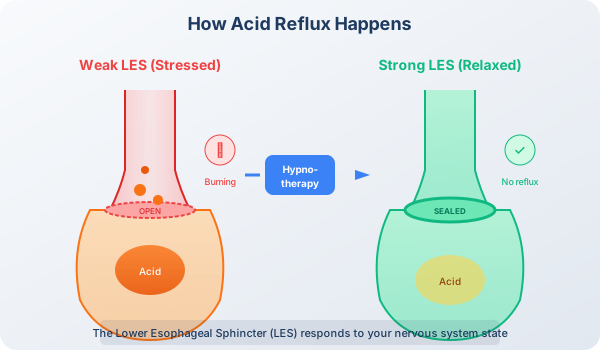
The LES is controlled by your autonomic nervous system – the same system that responds to stress.
When GERD occurs, the LES is either too weak, relaxes inappropriately, or both. And here's what most people don't realize: the strength and function of this sphincter is directly controlled by your nervous system.
If you've ever noticed your heartburn gets worse during stressful periods, you're not imagining it. The connection between stress and acid reflux is well-documented – and understanding it is key to effective treatment.
“Psychological factors such as stress, anxiety, and depression are significantly associated with GERD symptoms, independent of acid exposure levels.”
Here's what happens in your body when you're stressed:
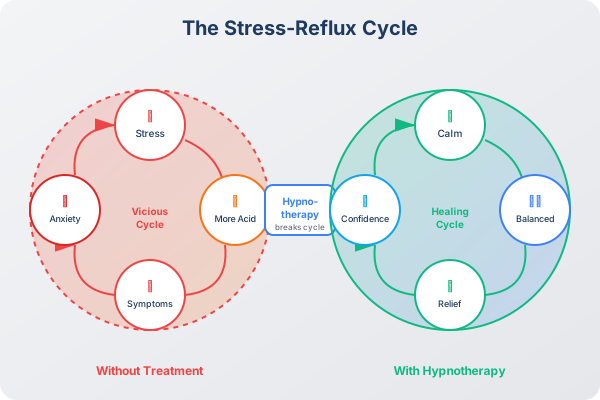
This creates a vicious cycle: stress causes reflux, reflux causes anxiety about symptoms, anxiety causes more stress, which causes more reflux. Breaking this cycle requires addressing the nervous system – not just suppressing acid.
Proton pump inhibitors (PPIs) like omeprazole, esomeprazole, and pantoprazole are the standard first-line treatment for GERD. They work by blocking acid production in the stomach. And for many people, they provide relief.
But there are significant limitations:
The key issue is that PPIs treat the symptom (acid) but not the mechanism (a dysfunctional LES and oversensitive esophagus). For patients whose reflux is driven primarily by nervous system factors – which research suggests is a substantial portion – medication alone will never be fully effective.
75% of patients with non-cardiac chest pain (a related condition) demonstrate esophageal hypersensitivity – they feel pain from normal sensations.
Source: Richter et al., Gastroenterology - PMID: 2323649
This is where hypnotherapy for acid reflux offers something different: it addresses the nervous system mechanisms that control both the LES and esophageal sensitivity.
Tired of depending on daily medications?
Esophageal-directed hypnotherapy offers a drug-free path to lasting relief.
See If This Could Help →Esophageal-directed hypnotherapy is a specialized form of clinical hypnosis developed specifically for upper GI disorders, including GERD and functional heartburn. It builds on the success of gut-directed hypnotherapy for IBS (which has 40+ years of research behind it) and adapts the approach for the esophagus.
Here's how it works:
Hypnotherapy shifts your body from “fight or flight” to “rest and digest” mode. This directly influences the vagus nerve, which controls the LES. In “rest and digest” mode, the LES maintains proper tone and functions correctly.
Specific suggestions during hypnosis help normalize how your brain processes esophageal sensations. Research shows hypnosis can modulate pain processing in the visceral sensory pathway, reducing the amplified pain response that characterizes functional heartburn.
Esophageal hypervigilance – constantly monitoring for reflux symptoms – perpetuates the anxiety-reflux cycle. Hypnotherapy interrupts this pattern by reducing visceral anxiety and teaching your brain to stop over-attending to normal esophageal sensations.
Unlike medications that work only while you're taking them, hypnotherapy creates long-term changes in how your nervous system functions. Research on gut-directed hypnotherapy shows benefits lasting 5+ years after treatment ends.
“Hypnotherapy can significantly reduce symptoms of gastroesophageal disorders by modulating brain activation patterns associated with pain processing, patterns strongly believed to be involved in the underlying pathophysiology.”
While research on esophageal-directed hypnotherapy specifically is still emerging, the existing studies show promising results:
A pilot study found that 7 weekly sessions of esophageal-directed hypnotherapy produced significant improvements in heartburn symptoms, reduced visceral anxiety, and improved quality of life in patients with functional heartburn who hadn't responded to medications.
Diseases of the Esophagus (2016) - PMID: 25824436A randomized controlled trial showed hypnotherapy was highly effective for functional chest pain (often esophageal in origin), with benefits maintained for 2+ years without further intervention.
Gut (2006) - PMID: 16361309The latest clinical guidelines recommend gut-directed hypnotherapy or cognitive behavioral therapy as appropriate brain-gut behavioral therapies for functional heartburn.
American Journal of Gastroenterology (2024) - PMID: 38518891Research has demonstrated that hypnosis can modulate gastric acid secretion and shorten gastric emptying times, showing direct physiological effects on digestive function.
Chiarioni et al., American Journal of GastroenterologyIf you have GERD and also experience bloating, cramping, or changes in bowel habits, you are not alone. Research shows a significant overlap between acid reflux and IBS, with studies finding that 30-50% of GERD patients also meet the criteria for IBS.
This overlap is not a coincidence. Both conditions share the same underlying mechanism: dysfunction in the gut-brain axis. The same nervous system dysregulation that weakens the lower esophageal sphincter and sensitizes the esophagus also disrupts motility and pain processing throughout the entire digestive tract.
Of GERD patients also meet the diagnostic criteria for IBS, suggesting shared pathophysiology through gut-brain axis dysfunction.
Source: De Bortoli et al., World Journal of Gastroenterology (2017)
This is why treating acid reflux with PPIs alone often leaves people with persistent digestive symptoms. You might suppress the acid, but the underlying nervous system dysfunction continues to drive symptoms elsewhere in the GI tract.
The good news: because both conditions share the same root cause, gut-directed hypnotherapy can address both simultaneously. By calming the entire gut-brain axis, hypnotherapy reduces not just reflux symptoms but also IBS-related bloating, pain, and bowel irregularity. If you are dealing with both, read more about how gut-directed hypnotherapy works for IBS.
The connection between stress and digestive symptoms runs deep. When your nervous system is in chronic fight-or-flight mode, it does not just affect one part of your gut -- it affects the entire system. Understanding this stress-digestive connection is key to finding lasting relief. And the central player in all of this is the gut-brain axis -- the communication highway between your brain and digestive system.
Not everyone with acid reflux needs hypnotherapy. For many people, lifestyle changes and short-term medication are sufficient. But if you find yourself in any of these situations, hypnotherapy may be the missing piece:
The first step is always a conversation with your gastroenterologist to rule out structural issues. Once you have confirmed that your reflux does not require surgical intervention, hypnotherapy becomes a strong option -- whether as a standalone treatment or alongside your current medications.
Esophageal-directed hypnotherapy typically involves 7 weekly sessions, each lasting about 45-60 minutes. Here's what the process looks like:
Comprehensive evaluation of your symptoms, medical history, current treatments, and goals. We ensure hypnotherapy is appropriate for your situation.
Learn deep relaxation techniques and experience your first hypnotherapy sessions focused on calming the nervous system. Receive audio for daily home practice.
Sessions focus specifically on normalizing esophageal sensations, reducing hypervigilance, and strengthening the mind-body connection to your upper GI tract.
Consolidate gains, develop self-hypnosis skills for ongoing use, and create a plan for maintaining benefits long-term.
Daily home practice is an important component – about 15-20 minutes daily listening to a guided recording. This reinforces the work done in sessions and accelerates nervous system changes.
Note: Hypnotherapy can be used alongside medical treatment – it doesn't have to be either/or. Many patients use hypnotherapy to reduce their medication needs over time.
Wonder if you're a good candidate?
The application process helps us determine if esophageal-directed hypnotherapy is right for your situation.
Apply to Work With Me →No – hypnotherapy can be used alongside your current medications. Any changes to your medication regimen should be discussed with your prescribing physician. Many patients find they can reduce medications over time.
Many people notice some improvement within the first few sessions, particularly in stress levels and anxiety about symptoms. More significant changes typically develop over the full 7-week program.
Yes – hypnotherapy is non-invasive and has no known side effects. It's recommended in clinical guidelines as an appropriate treatment for functional heartburn and related conditions.
Absolutely – all sessions are conducted via video call. Research shows virtual hypnotherapy is equally effective, and it's often more convenient and comfortable to be in your own space.
Research shows the vast majority of people can benefit from hypnotherapy, regardless of “hypnotizability” scores. The techniques used are gentle and collaborative – it's more like guided meditation than stage hypnosis.
Research on gut-directed hypnotherapy shows benefits can last 5+ years after treatment ends. You'll also learn self-hypnosis skills you can use independently for ongoing maintenance.
Yes -- 30-50% of GERD patients also have IBS. Both conditions involve gut-brain axis dysfunction, which means hypnotherapy can address both simultaneously by calming the shared nervous system mechanisms.
No -- hypnotherapy complements your medical care. You should always see your doctor to rule out serious conditions. Hypnotherapy works best as part of an integrated approach, addressing the nervous system factors that medications cannot reach.
You'll receive a personalized guided audio recording to listen to for 15-20 minutes each day. Most people find it deeply relaxing -- many use it before bed. Consistent practice is the single biggest predictor of treatment success.
No referral is needed. However, we recommend you continue working with your gastroenterologist for medical monitoring. Major medical guidelines (NICE, AGA, ACG) support hypnotherapy for functional GI disorders, so most GI doctors are supportive.
Living with chronic acid reflux is exhausting – the constant burning, the food restrictions, the worry about when the next flare will hit. And if medications aren't giving you full relief, it can feel like there's no way out.
But there is another option. Hypnotherapy for acid reflux and GERD addresses the nervous system factors that drive your symptoms – the stress response that weakens your LES, the hypersensitivity that amplifies pain, the hypervigilance that keeps you stuck in the cycle.
Your nervous system learned these patterns. It can unlearn them too.
— Danny
📅 Currently accepting 4 new weight loss clients per month

Probably the only credentialed fraud examiner for Fortune 100 companies turned Clinical Hypnotherapist on the planet. After 10+ years investigating high-profile corporate deception, Danny now applies that same ruthlessly analytical mindset to something more rewarding: helping people stop deceiving themselves. He specializes in anxiety, gut issues, and pain reduction.
Last updated: February 2026
Registered Clinical Hypnotherapist specializing in gut-directed hypnotherapy for IBS, GERD, and functional digestive disorders. Evidence-based treatment serving Calgary and all of Canada through virtual sessions.
Learn more about our approachContinue exploring gut-directed hypnotherapy topics
An evidence-based comparison of the low FODMAP diet and gut-directed hypnotherapy for IBS. Learn how each works, what the research shows, and whether combining them makes sense.

From NICE guidelines to the American Gastroenterological Association, the medical community increasingly endorses gut-directed hypnotherapy for IBS. Here is what GI doctors are actually saying about it.

Emerging research shows hypnotherapy can improve quality of life and reduce symptom burden in IBD. Learn how it complements medical treatment for Crohn's disease and ulcerative colitis.