
FODMAP Diet vs Gut Hypnotherapy: Which Works Better for IBS?
An evidence-based comparison of the low FODMAP diet and gut-directed hypnotherapy for IBS. Learn how each works, what the research shows, and whether combining them makes sense.
Discover why hypnotherapy for constipation works when fiber, laxatives, and diet changes haven't – and how IBS-C hypnotherapy restores natural gut motility.
You've tried more fiber. More water. Prunes, magnesium, even prescription laxatives. Yet every morning, it's the same frustrating routine. What if the problem isn't in your gut at all – but in the signals controlling it?
Hypnotherapy for constipation is a clinically-proven approach that targets the gut-brain miscommunication at the heart of IBS-C. Rather than forcing your gut to move with laxatives, it restores the natural signaling that makes healthy bowel function automatic.
Find out in 60 seconds
Adapted from the Stanford & Tellegen clinical scales
When reading a book or watching a movie, do you get so absorbed you lose track of time?
If you've been told “just eat more fiber” one more time, you're not alone. For people with IBS-C (constipation-predominant irritable bowel syndrome), the standard advice often makes things worse, not better.
The breakthrough? Understanding that chronic constipation isn't a fiber deficiency – it's often a nervous system dysregulation. And that's exactly what IBS-C hypnotherapy addresses.
IBS-C is a subtype of irritable bowel syndrome where constipation is the primary symptom. Unlike simple constipation from diet or medication side effects, IBS-C involves a complex interaction between your brain, nervous system, and gut.
The defining features of IBS-C include:
have the constipation-predominant subtype (IBS-C), making it one of the most common forms of functional gut disorders.
Source: Lacy et al., American Journal of Gastroenterology (2021)
The key distinction: In IBS-C, there's nothing structurally wrong with your gut. Colonoscopies, blood tests, and imaging all come back normal. The problem is functional – the way your nervous system communicates with your gut.
“IBS is fundamentally a disorder of gut-brain interaction. The brain and gut are communicating, but the signals have become dysregulated.”
The typical approach to constipation is straightforward: add fiber, drink water, take a laxative if needed. For IBS-C, this approach often backfires.
The core issue? These treatments focus on forcing the gut to move rather than restoring the natural signals that control motility. It's like trying to fix a car radio by turning up the volume – you're not addressing the actual reception problem.
Here's what most people don't realize: your gut has its own nervous system. The “enteric nervous system” contains over 500 million neurons – more than your spinal cord. And it's in constant communication with your brain via the vagus nerve.
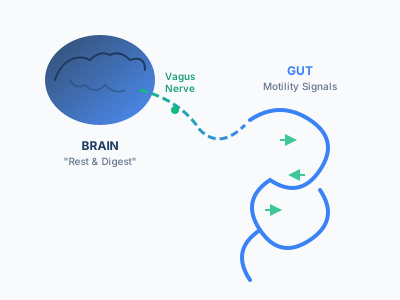
The vagus nerve carries “rest and digest” signals to your gut. When stressed, these signals decrease.
When your nervous system is in fight-or-flight mode (sympathetic activation), your body diverts resources away from digestion. Blood flow to the gut decreases, motility slows, and the muscles that move food through your intestines become sluggish.
This made sense for our ancestors. When running from a tiger, you don't need to digest your breakfast. But in modern life, chronic low-level stress keeps many people stuck in this state 24/7.
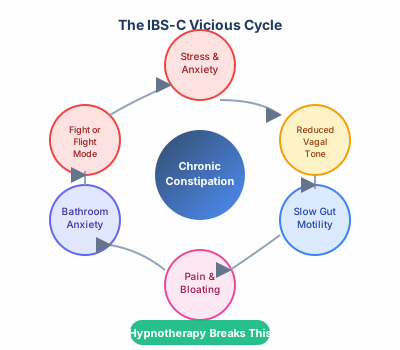
Here's where IBS-C becomes self-perpetuating:
Research confirms that people with IBS have reduced vagal activity compared to healthy controls, contributing to both motility issues and visceral hypersensitivity.
Source: Pellissier et al., PLOS ONE (2014)
This is why hypnotherapy for constipation works: it breaks this cycle at the source by retraining the nervous system.
Tired of being dependent on laxatives?
Gut-directed hypnotherapy restores your body's natural motility signals.
See If This Could Help You →IBS-C hypnotherapy works differently than relaxation or meditation apps. It uses the hypnotic state to directly communicate with the subconscious processes that control gut function.
Here's what happens during gut-directed hypnotherapy for constipation:
The hypnotic state naturally shifts your nervous system into parasympathetic mode (“rest and digest”). This increases blood flow to the gut, activates digestive enzymes, and stimulates the smooth muscle contractions (peristalsis) that move food through your intestines.
During hypnosis, specific suggestions are given about your gut functioning smoothly and comfortably. Brain imaging shows these suggestions actually change activity in brain regions that control gut sensation and movement. You're essentially reprogramming the gut-brain axis.
People with IBS-C often have amplified gut sensations – normal distension feels painful. Hypnotherapy reduces this “volume knob” on gut sensations, so normal digestive processes don't trigger discomfort or the urge to strain.
Many IBS-C patients develop anxiety around bowel movements – they strain, rush, or avoid. This tension makes constipation worse. Hypnotherapy addresses these psychological patterns, creating a relaxed, natural relationship with your body's elimination process.
With repeated sessions, the brain and nervous system physically change. The dysfunctional gut-brain patterns get replaced with healthy ones. This is why benefits typically last for years – you've created new neural pathways, not just learned a coping skill.
Gut-directed hypnotherapy has over 40 years of clinical research supporting its use for IBS, including IBS-C specifically.
A comprehensive review of 12 studies with 1,158 IBS patients found gut-directed hypnotherapy to be an effective treatment across multiple delivery methods (individual, group, and digital).
Adler et al., Neurogastroenterology & Motility (2025)The landmark research showing 75-80% of IBS patients experience significant symptom improvement with gut-directed hypnotherapy, with benefits lasting 5+ years after treatment ended.
The Lancet, Gut, and follow-up studies (1984-present)A randomized clinical trial found gut-directed hypnotherapy was equally effective as the low FODMAP diet (both ~70% response rate), with some studies showing hypnotherapy had better long-term maintenance.
Peters et al., Alimentary Pharmacology & Therapeutics (2016)Two RCTs with 138 IBS patients showed significant symptom improvement at 3 months in the hypnotherapy groups, while control groups showed no significant change.
Lindfors et al., American Journal of Gastroenterology (2012)“Gut-directed hypnotherapy has been shown to be an effective treatment for irritable bowel syndrome... improvements in IBS symptoms observed for up to 6 years after treatment.”
Importantly, these results include patients with “refractory” IBS – people who had tried multiple treatments without success. Hypnotherapy works even when other approaches have failed.
Treatment typically involves 6-12 sessions over 2-3 months. Here's what the timeline often looks like:
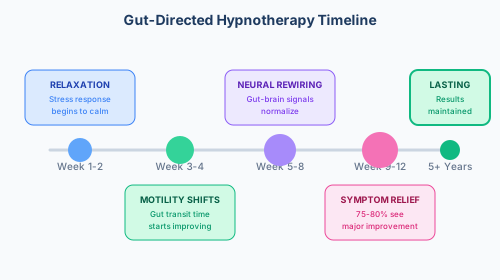
Each session builds on the previous one. You'll also learn self-hypnosis techniques to practice between sessions, reinforcing the changes and giving you tools for managing any future flare-ups.
Ready to restore natural gut function?
Find out if gut-directed hypnotherapy is right for your IBS-C.
Book a Free Consultation →Yes. Over 40 years of research shows 75-80% of IBS patients (including IBS-C) experience significant improvement with gut-directed hypnotherapy. A 2025 meta-analysis of 1,158 patients confirmed its effectiveness.
Most people need 6-12 sessions over 2-3 months. Research shows both 6 and 12 session protocols are effective, with some patients responding faster than others.
Many patients are able to reduce or eliminate laxative use as their natural motility improves. This should be done gradually and discussed with your healthcare provider.
No. Hypnotherapy is a state of focused relaxation, not unconsciousness. You remain aware and in control throughout. You cannot be made to do anything against your will.
Yes. Gut-directed hypnotherapy is effective for all IBS subtypes, including IBS-D (diarrhea-predominant) and IBS-M (mixed). It normalizes gut function regardless of the direction of dysregulation.
In Alberta, hypnotherapy is often covered under “paramedical” or “alternative therapy” benefits. Check with your provider. Many extended health plans now cover clinical hypnotherapy.
What is hypnotherapy for constipation? Hypnotherapy for constipation (IBS-C hypnotherapy) is a clinically-proven treatment that uses the hypnotic state to retrain the gut-brain communication system, restoring natural gut motility without reliance on laxatives.
Key benefits:
Who it's for: People with IBS-C (constipation-predominant IBS) who haven't found lasting relief from fiber, laxatives, or dietary changes.
Success rate: 75-80% of patients experience significant symptom improvement (Whorwell et al., multiple studies 1984-present).
Next step: Book a free consultation at Calgary Gut Hypnotherapy to discuss if IBS-C hypnotherapy is right for your situation.
📅 Currently accepting 4 new weight loss clients per month
Registered Clinical Hypnotherapist specializing in gut-directed hypnotherapy for IBS, GERD, and functional digestive disorders. Evidence-based treatment serving Calgary and all of Canada through virtual sessions.
Learn more about our approachContinue exploring gut-directed hypnotherapy topics
An evidence-based comparison of the low FODMAP diet and gut-directed hypnotherapy for IBS. Learn how each works, what the research shows, and whether combining them makes sense.

From NICE guidelines to the American Gastroenterological Association, the medical community increasingly endorses gut-directed hypnotherapy for IBS. Here is what GI doctors are actually saying about it.

Emerging research shows hypnotherapy can improve quality of life and reduce symptom burden in IBD. Learn how it complements medical treatment for Crohn's disease and ulcerative colitis.