
FODMAP Diet vs Gut Hypnotherapy: Which Works Better for IBS?
An evidence-based comparison of the low FODMAP diet and gut-directed hypnotherapy for IBS. Learn how each works, what the research shows, and whether combining them makes sense.
Discover how gut-directed hypnotherapy helps IBS-D patients break the urgency-anxiety cycle and restore normal bowel function – without medication.
“Where's the nearest bathroom?” If this question runs through your mind every time you leave home, you're not alone. IBS-D can hijack your entire life – but it doesn't have to.
Hypnotherapy for diarrhea isn't about “thinking yourself better.” It's about rewiring the overactive brain-gut connection that's causing your symptoms – and the research shows it works remarkably well.
Find out in 60 seconds
Adapted from the Stanford & Tellegen clinical scales
When reading a book or watching a movie, do you get so absorbed you lose track of time?
Living with IBS-D means constantly scanning for bathrooms, avoiding foods, skipping events, and dealing with that gut-wrenching anxiety before meetings, travel, or even dinner with friends. Medications might help temporarily, but for many people, they're not enough.
Here's what most treatments miss: IBS-D hypnotherapy targets the actual problem – a hypersensitive communication system between your brain and gut that's stuck in overdrive.
IBS-D (Irritable Bowel Syndrome with Diarrhea) is a subtype of IBS characterized by frequent loose or watery stools, urgent bowel movements, and abdominal pain that improves after a bowel movement. It's the most common IBS subtype, affecting roughly 40% of IBS patients.
But here's what the diagnosis doesn't capture: the psychological toll. The constant bathroom mapping. The fear of accidents. The anxiety before any event where you might not have easy bathroom access. This isn't just a gut problem – it's a life-limiting condition.
Approximately 10-15% of the global population has IBS, with IBS-D being the most common subtype in Western countries.
Source: Rome Foundation Global Study (2021)
Traditional treatments – dietary changes, fiber supplements, antidiarrheals, antispasmodics – address symptoms but often miss the underlying dysfunction. That's where hypnotherapy for diarrhea differs: it targets the actual mechanism causing your symptoms.
Here's something most IBS-D sufferers intuitively know but rarely hear from their doctors: stress makes it worse. A lot worse. And that's not “in your head” – it's neurophysiology.
Your gut and brain are connected by the vagus nerve and the enteric nervous system (your “second brain” with 500 million neurons). In IBS-D, this communication system becomes hypersensitive and hyperactive:
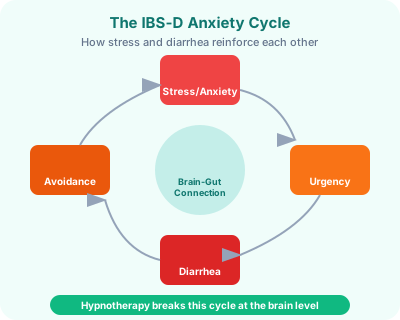
“The gut-brain axis in IBS-D patients shows hypervigilance – the brain becomes excessively focused on gut sensations, amplifying normal signals into urgent symptoms.”
Gut-directed hypnotherapy for IBS-D doesn't treat symptoms – it treats the underlying brain-gut miscommunication. Here's how:
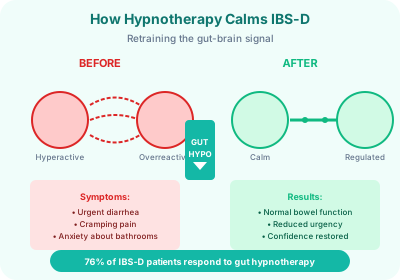
In IBS-D, normal gut sensations get amplified into pain and urgency signals. Hypnotherapy for diarrhea reduces this visceral hypersensitivity – brain imaging studies show actual changes in how the brain processes gut signals after treatment.
Through guided relaxation and specific gut-focused suggestions, hypnotherapy activates the parasympathetic (“rest and digest”) nervous system. This directly counteracts the fight-or-flight response that triggers diarrhea.
IBS-D involves accelerated gut transit (things move too fast). Hypnotic suggestions targeting gut motility help normalize the speed at which food moves through your system, reducing both urgency and frequency.
Perhaps most importantly, IBS-D hypnotherapy disrupts the learned anxiety pattern. Your brain “unlearns” the association between situations and bathroom emergencies, restoring your confidence.
Neuroimaging studies show hypnotherapy actually changes how the brain processes gut signals, with reduced activity in pain and vigilance centers.
Source: Lowén et al., Neurogastroenterology & Motility (2013)
Tired of planning your life around bathrooms?
Gut-directed hypnotherapy targets the brain-gut connection that's driving your IBS-D symptoms.
See If This Could Help You →The evidence for hypnotherapy for diarrhea and IBS-D specifically is robust, with over 40 years of clinical research:
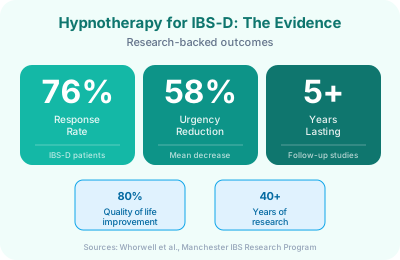
The pioneering research showed 76% of IBS patients (including IBS-D) experienced significant symptom improvement with gut-directed hypnotherapy, compared to 25% with supportive therapy alone.
The Lancet (1984) – 40+ years of follow-up studiesBenefits last: 5-year follow-up studies show 81% of responders maintain their improvement without needing additional treatment. This durability is unique among IBS treatments.
Gonsalkorale et al., Gut (2003)Research specifically examining IBS-D patients shows significant reductions in stool frequency, urgency, and improved stool consistency after hypnotherapy treatment.
Palsson et al., American Journal of Gastroenterology (2002)Beyond symptoms: patients report 80% improvement in quality of life scores, including reduced anxiety, better social functioning, and ability to work/travel normally.
Moser et al., Wien Klin Wochenschr (2013)“Gut-directed hypnotherapy is one of the most effective treatments for IBS currently available. The evidence base is substantial, and the effects are durable.”
IBS-D hypnotherapy typically involves 6-12 sessions over 2-3 months. Here's what the process looks like:
Learn deep relaxation techniques. Begin to experience the hypnotic state. Understand how your brain and gut communicate and how we'll retrain that connection.
Specific hypnotic suggestions targeting gut function: calming motility, reducing sensitivity, building a sense of control. Many patients notice changes starting here.
Deepen the neuroplastic changes. Address anticipatory anxiety. Build confidence in situations that used to trigger symptoms.
Transition to self-hypnosis. You'll have tools to maintain and reinforce the changes independently. Most patients don't need ongoing treatment.
Ready to break free from IBS-D?
Gut-directed hypnotherapy provides lasting relief where medications fall short.
Apply to Work With Me →No. Hypnotherapy is a state of focused relaxation where you remain fully aware and in control. You can open your eyes and stop at any time. It's closer to deep meditation than sleep.
Many patients notice some improvement within 3-4 sessions. Significant, lasting changes typically develop over the full 8-12 week program as neuroplastic changes consolidate.
Absolutely. Hypnotherapy works alongside medications. Many patients eventually reduce their medication use as symptoms improve, but that's always done in consultation with their doctor.
Most people (about 85%) can achieve sufficient hypnotic response for therapeutic benefit. Even those with lower hypnotizability often improve with practice – it's a skill that develops.
Yes. Research during COVID showed virtual delivery is equally effective for gut-directed hypnotherapy. Many patients actually prefer the convenience of sessions from home.
No. Unlike medications, hypnotherapy creates lasting change. The 5+ year follow-up studies show most patients maintain their improvement without ongoing treatment. You'll have self-hypnosis skills if you ever need a “tune-up.”
If you've been managing IBS-D with a combination of dietary restrictions, medications, bathroom mapping, and hope – and still find yourself limited by your symptoms – hypnotherapy for diarrhea offers a different path.
It's not about willpower or positive thinking. It's about retraining a brain-gut connection that's gotten stuck in a pattern that no longer serves you.
Your gut can learn to calm down. The research proves it. The question is whether you're ready to give it a try.
— Danny
📅 Currently accepting 4 new weight loss clients per month

Probably the only credentialed fraud examiner for Fortune 100 companies turned Clinical Hypnotherapist on the planet. After 10+ years investigating high-profile corporate deception, Danny now applies that same ruthlessly analytical mindset to something more rewarding: helping people stop deceiving themselves. He specializes in anxiety, gut issues, and pain reduction.
Last updated: January 2026
Registered Clinical Hypnotherapist specializing in gut-directed hypnotherapy for IBS, GERD, and functional digestive disorders. Evidence-based treatment serving Calgary and all of Canada through virtual sessions.
Learn more about our approachContinue exploring gut-directed hypnotherapy topics
An evidence-based comparison of the low FODMAP diet and gut-directed hypnotherapy for IBS. Learn how each works, what the research shows, and whether combining them makes sense.

From NICE guidelines to the American Gastroenterological Association, the medical community increasingly endorses gut-directed hypnotherapy for IBS. Here is what GI doctors are actually saying about it.

Emerging research shows hypnotherapy can improve quality of life and reduce symptom burden in IBD. Learn how it complements medical treatment for Crohn's disease and ulcerative colitis.